Unmasking the ‘DIY Disasters’: What an Inspector Finds Behind Fresh Paint and Quick Reno Jobs
There is no denying the emotional pull of a classic NSW South Coast cottage, a beachside brick-and-tile renovator, or a mid-century shack. With a bit of vision, a modern color palette, and some trendy styling, these older coastal properties can be transformed into absolute real estate gold. Property apps and television shows make flipping look like a breezy weekend project, and in our highly competitive local market, the allure of buying a “fully renovated” home where all the hard work has supposedly been done is incredibly strong.
But there is a distinct difference between a professional, council-compliant renovation and a cosmetic “quick flip.”
While many local renovators take immense pride in their craftsmanship, others rely heavily on superficial makeovers to mask major, deep-seated structural issues. To an eager buyer walking through a weekend open home, the property can look flawless, smelling of fresh paint and looking like a page out of a design magazine. But beneath that flawless surface, it could be a financial ticking time bomb.
Before you sign an unconditional contract on a beautifully staged property, here is what a professional pre-purchase house inspection uncovers when looking past the cosmetic illusions and unmasking the most common signs of bad DIY renovation.
1. The Cosmetic Illusion: Fresh Paint Over Mould and Structural Leaks
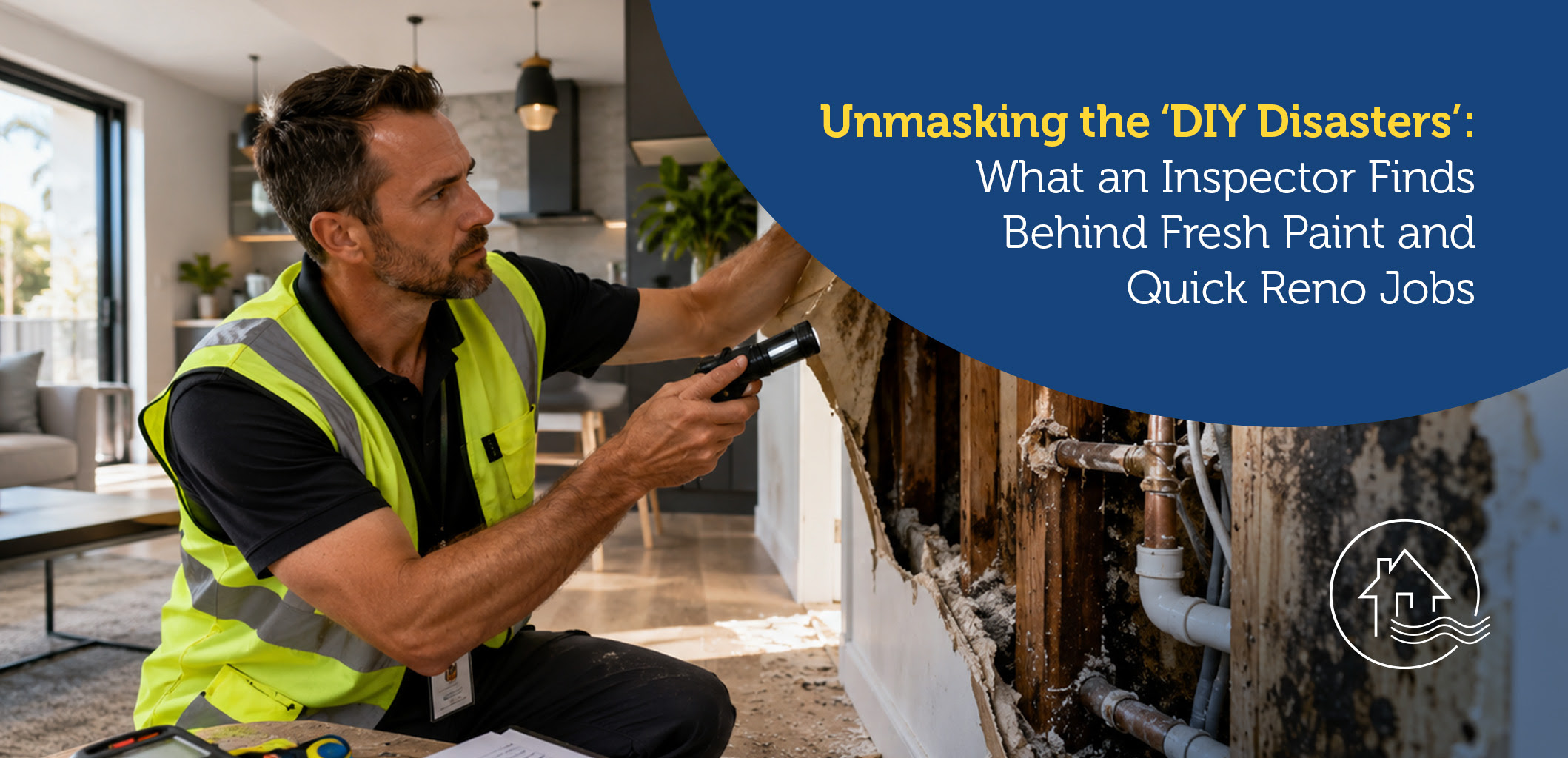
Paint is arguably a rogue renovator’s most powerful tool and consequently, it is a building inspector’s immediate red flag. A fresh coat of crisp white paint can instantly make a dark, damp room feel bright, modern, and clean. Unfortunately, it can also be used to temporarily conceal rising damp, active water staining, ceiling sagging from a leaking roof, or severe wall cracking caused by foundation movement.
When a property is rushed to market, a quick lick of paint will hide these blemishes just long enough for the open home campaign to finish and the contract to settle. Within six to twelve months, however, the underlying moisture or structural shift will cause that beautiful new paint to bubble, crack, and peel, exposing the original disaster underneath.
- How we unmask it: A professional inspector doesn’t just rely on a visual assessment. During a pre-purchase house inspection, the team uses specialized, high-grade moisture meters and thermal imaging cameras to test behind freshly painted internal walls. We pay specific attention to walls sharing boundaries with bathrooms, laundries, or external brickwork. If there is a hidden leak or trapped moisture, our technology detects it long before the physical evidence breaks through the new paint layer.
2. The Multi-Dollar Nightmare: Hidden Home Waterproofing Issues
Bathroom and kitchen renovations are the most expensive zones of a house to repair if they fail, and they are statistically the number one location for severe signs of bad DIY renovation.
With the rise of hardware superstores, it has become incredibly easy for an amateur DIYer to purchase trendy, oversized porcelain tiles, modern tapware, and sleek frameless glass shower screens. Installing the tiles might only take a weekend of patience, but applying a fully compliant, long-lasting waterproof membrane beneath those tiles requires strict professional expertise, precise curing times, and adherence to Australian Standards (AS 3740).
- The Risk: When waterproofing is done poorly or skipped entirely to save time, it creates catastrophic home waterproofing issues. Every single time someone takes a shower, water subtly seeps into the wall cavities and the structural subfloor. Because the damage happens out of sight, you won’t notice it immediately. By the time you smell a faint, musty odour or notice a soft spot under the carpet in the adjacent bedroom, the structural timber framework of the home could be entirely rotted out or infested with timber pests. Rectifying a failed waterproof membrane usually requires a complete strip-out back to the studs, costing tens of thousands of dollars.
- How we unmask it: We meticulously inspect the fall of the drainage, check for signs of swelling in adjacent skirting boards, analyze the silicone seals, and use non-invasive moisture detection devices around all wet areas to ensure the structural envelope is entirely sealed.
3. The Structural Gamble: Subfloor Sagas Masked by New Flooring
Older coastal homes often feature gorgeous timber subfloors raised on piers. Over forty or fifty years, it is entirely natural for these homes to experience some level of foundation settlement, soil movement, or historical timber pest damage.
A common, highly effective cosmetic trick used in quick flips is to lay modern engineered timber, luxury vinyl planks, or thick hybrid flooring directly over an uneven, unlevel floor. It instantly gives the interior a seamless, perfectly level appearance underfoot, but it conveniently hides the fact that the stumps, concrete piers, or timber bearers supporting the weight of the entire house are failing, sinking, or rotting away in the crawl space below.
- How we unmask it: We don’t just walk across the shiny new floors; we get down into the dirt beneath them. Our inspection process involves physically crawling into the subfloor spaces to examine the true foundations of the property. We inspect the connection points, check for active soil movement, look for inadequate ventilation (which causes dry rot), and verify that the home is structurally sound, adequately supported, and free from major structural building defects.
Why the NSW South Coast Requires a Specialist Local Eye
Renovating a property in a coastal environment like Batemans Bay, Eurobodalla, Ulladulla, or the wider NSW South Coast requires materials and construction methods that can withstand severe environmental stressors. The combination of salt-laden air, high humidity, shifting coastal sands, and intense East Coast Low storm systems will expose poor workmanship and sub-standard materials substantially faster than it would in an inland city.
An un-galvanized bracket used on a deck, an improperly sealed window frame, or sub-standard roofing screws used by an unqualified handyman will quickly corrode and fail under the harsh coastal conditions. As licensed builders with over 15 years of local hands-on construction experience, the team at Coastal Inspections knows precisely where DIY renovators cut corners, which materials fail prematurely in our marine environment, and how the local climate reacts to those shortcuts.
Don’t Buy Someone Else’s Expensive Mistake
Investing in a home that suffers from masked structural building defects, bad wiring, or failed waterproofing can instantly transform your peaceful coastal dream into an overwhelming financial and emotional nightmare.
You do not have to guess what is lurking behind the beautiful styling and fresh plasterboard. A comprehensive, independent inspection provides the clarity, photographic evidence, and hard facts you need. Whether you use our report to confidently negotiate the purchase price down to cover repair costs, demand the vendor fixes the issues via licensed trades before settlement, or safely walk away from a bad deal entirely, knowledge is your ultimate leverage.
Our comprehensive building and timber pest reports are delivered with an industry-leading 24-hour turnaround, ensuring you can move quickly in a fast-paced market without sacrificing your peace of mind.
Booking your peace of mind is simple. Click here to book your pre-purchase inspection online or call Darren directly to discuss the specific property you are looking at buying on the NSW South Coast.