The Hidden Dangers of Coastal Properties, What We Look for in Salt Air Environments
There is an undeniable allure to coastal living. From the pristine beaches of Mollymook and Ulladulla down to the quiet inlets of Batemans Bay and Moruya, the NSW South Coast offers a lifestyle many dream of. However, the very elements that make these locations so beautiful, the salt spray, the sea breeze, and the sandy terrain are the same elements that can quietly wreak havoc on a building’s structural integrity.
When you are buying a home near the ocean, you aren’t just buying a property; you are buying into an environment that is high exposure. At Coastal Inspections, we specialize in identifying the unique architectural fatigue that occurs in these zones.
If you are considering a seaside investment, here is a deep dive into the hidden dangers we look for during our pre purchase inspections and why coastal properties require a specialized eye.
1. The Silent Killer: Salt Spray and Metal Corrosion
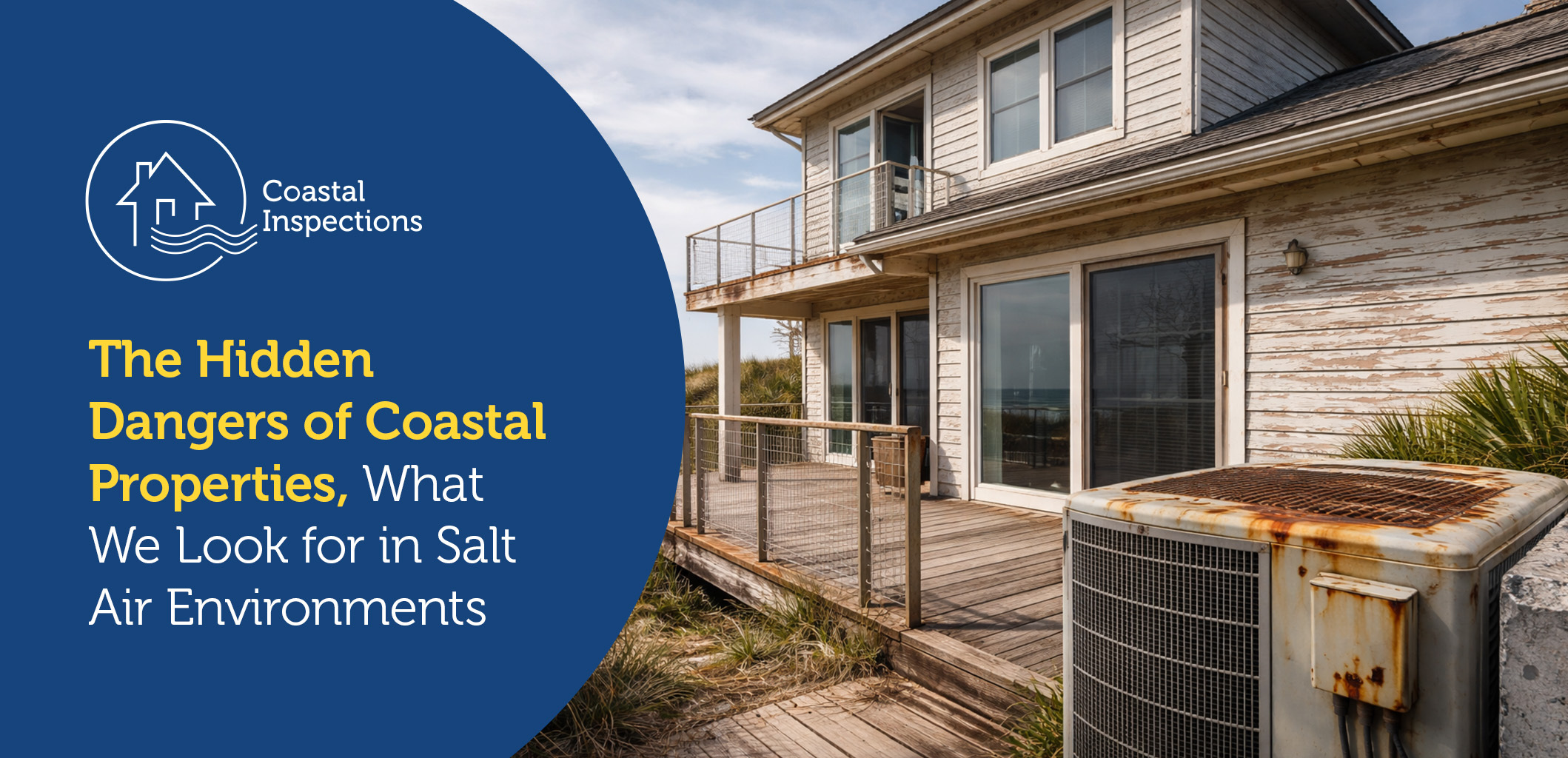
In a coastal environment, salt is everywhere. It is carried by the wind and deposited on every surface of a home. While most people notice tea staining on stainless steel railings, the real danger lies where you can’t see it.
Concrete Cancer (Spalling)
One of the most serious issues we encounter is concrete spalling, commonly known as concrete cancer. In coastal areas, salt penetrates the porous surface of concrete and reaches the steel reinforcement bars (rebar) inside. As the steel corrodes, it expands, causing the surrounding concrete to crack and break away.
If left unchecked, this can compromise the structural integrity of balconies, lintels, and foundations. During a Coastal Inspections assessment, we look for tell tale rust stains or hairline cracks in concrete structures that suggest the cancer has already begun beneath the surface.
Accelerated Metal Fatigue
From roof screws and gutters to the structural ties that hold a house together, metal is under constant attack. Standard galvanized steel that might last 50 years inland may only last 10 to 15 years within a kilometer of the ocean. We pay close attention to the condition of the roof cladding and flashings, as a compromised roof in a coastal storm can lead to catastrophic water ingress.
2. Shifting Ground: Structural Integrity in Sandy Soil
The geology of the South Coast is as varied as its coastline. Many coastal homes are built on sandy or reactive soils. While sand provides excellent drainage, it is also prone to movement and erosion, especially during the East Coast Lows that occasionally batter our region.
Foundation Movement and Subsidence
Sandy soils can shift or wash away if drainage systems are not perfectly maintained. We look for signs of settlement cracks in external brickwork or internal plaster. If a house is built on a dune or a steep coastal slope, we assess the retaining walls and the footprint of the home to ensure it isn’t slowly migrating toward the sea.
Sub Floor Dampness
Because coastal areas often have high water tables, the sub floor area of a home can become a trap for moisture. Even if a house looks dry on top, the space beneath could be a breeding ground for wood rot and more dangerously termites. As part of our comprehensive Pre Purchase Building and Pest Inspections, we get into those tight spaces to ensure the timber supports are dry, sound, and free from pests.
3. The Power of the Wind: Wind Damage and Uplift
The South Coast is famous for its southerly busters. Coastal properties are often subject to much higher wind classifications than those just a few kilometers inland.
Roof and Cladding Security
When we inspect a coastal property, we aren’t just looking for leaks; we are looking at how the house handles uplift. High winds create a vacuum effect that can literally pull a roof off its rafters if the tie downs are corroded or improperly installed. We check for loose flashings, weathered cladding, and the integrity of window seals. In a salt air environment, the rubber and silicone seals on windows can perish prematurely, leading to whistling winds and water leaks during heavy storms.
Deck and Balcony Safety
Coastal homes often feature expansive decks to take in the views. However, these are the most exposed parts of the building. We check the joist to bearer connections and the status of the bolts. If those bolts have rusted through due to salt air, the deck becomes a major safety liability.
4. Why Local Expertise Matters
You might find a building inspector from the city who is willing to travel, but they may not understand the nuances of the NSW South Coast. At Coastal Inspections, we live and work in this environment. We know how the salt air moves through the Batemans Bay area, and we know which estates in Ulladulla are built on more difficult ground.
When you book a pre purchase inspection with us, you aren’t just getting a checklist; you’re getting a detailed, easy to read report (usually within 24 hours) that highlights:
- The current state of salt affected materials.
- The structural health of the foundations.
- Compliance with Australian Standards.
- Peace of mind that your dream home won’t become a financial nightmare.
The Coastal Inspections Difference
Buying a property is likely the biggest investment of your life. In a coastal environment, the stakes are even higher. The hidden dangers aren’t always visible to the untrained eye during an open house. A fresh coat of paint can hide concrete cancer, and a tidy garden can mask drainage issues.
Don’t let the sea breeze blind you to the reality of the structure. Our team provides professional, independent, and thorough inspections across the South Coast, including Batemans Bay, Moruya, Broulee, Tuross Head, Ulladulla, and Milton.
Ready to buy with confidence? Visit Coastal Inspections today to book your inspection or call us to discuss your potential new home. We’ll make sure the only thing you have to worry about is where to put your outdoor furniture.